instructions for old maid card game

Old Maid Card Game: A Comprehensive Guide

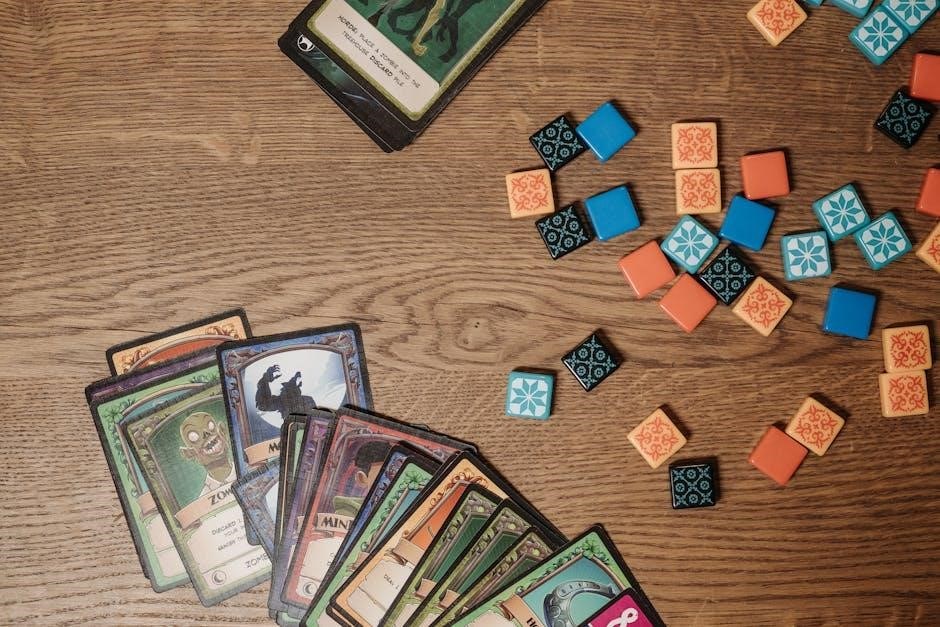
Old Maid is a classic matching game for two or more players‚ utilizing a standard 52-card deck. The core objective revolves around skillfully pairing cards and avoiding being left with the unmatched “Old Maid” card!

Old Maid is a delightfully simple yet engaging card game‚ traditionally enjoyed by two or more players. The game centers around matching pairs of cards‚ with the ultimate goal being to avoid holding the single‚ unmatched card – the infamous “Old Maid.” This classic pastime has been a source of entertainment for generations‚ particularly gaining prominence during the Victorian era.

The game utilizes a standard 52-card deck‚ though a slight modification is necessary to establish the Old Maid. Typically‚ one card‚ often a Queen‚ is removed before dealing‚ designating the remaining Queen as the Old Maid. Players then take turns drawing cards from each other‚ attempting to complete pairs in their hands.

The suspense builds as players strategically draw‚ hoping to avoid receiving the unwanted Old Maid. When a player successfully forms a pair‚ they discard it. The game continues until only one player remains holding the Old Maid‚ declaring them the loser – and often playfully dubbed the “Old Maid” themselves!

Historical Origins of the Game

The roots of Old Maid trace back to the Victorian era‚ a period when card games were a popular form of social entertainment. Interestingly‚ original decks actually included a specifically designated “Old Maid” card‚ rather than relying on modifying a standard deck as is commonly done today. These specialized decks catered directly to the game’s premise.

However‚ as card production evolved‚ the dedicated Old Maid card gradually disappeared from standard decks. This led to the adaptation of using a Queen – or occasionally a Jack or other card – as the substitute Old Maid. This shift demonstrates the game’s adaptability and enduring appeal.

The game’s emergence coincided with societal norms surrounding marriage during the Victorian period‚ subtly reflecting anxieties about unmarried women. The “Old Maid” became a symbolic representation of this societal concern‚ adding a layer of cultural context to the seemingly simple card game. Its popularity surged in the late 19th century‚ solidifying its place in gaming history.

The Victorian Era and the Old Maid Card

During the Victorian era‚ the Old Maid card game wasn’t merely played with a modified standard deck; it featured decks specifically printed with an extra card designated as the “Old Maid.” This unique card visually represented the unfortunate player destined to be left unmatched. These specialized decks were a direct product of the game’s rising popularity and societal context.

The Victorian period’s strict social conventions surrounding marriage heavily influenced the game’s thematic resonance. An unmarried woman‚ particularly as she aged‚ faced limited options and societal stigma. The “Old Maid” card subtly embodied these anxieties‚ making the game more than just a pastime – it was a reflection of Victorian social realities.

Playing with these dedicated decks offered a more authentic experience‚ directly aligning with the game’s original intent. However‚ as card manufacturing practices changed‚ these specialized decks became less common‚ leading to the now-standard practice of designating a Queen as the Old Maid.

Evolution of the Old Maid Trope

The “Old Maid” trope‚ initially rooted in Victorian anxieties surrounding unmarried women‚ has evolved significantly over time‚ yet its core symbolism persists within the card game. Originally a direct commentary on societal pressures‚ the figure of the Old Maid has become a more generalized representation of being “left out” or undesirable.

While the Victorian context specifically targeted unmarried women‚ the modern interpretation broadens the scope; The Old Maid now symbolizes anyone facing social exclusion or lacking a partner – a shift reflecting changing societal norms and a lessening of the stigma associated with remaining single.

Despite this evolution‚ the game retains its playful‚ albeit slightly ironic‚ edge. The act of avoiding the Old Maid card remains the central goal‚ perpetuating the trope’s enduring presence in popular culture. The game‚ therefore‚ serves as a fascinating microcosm of evolving social attitudes.

Components Needed for Play

Successfully playing Old Maid requires minimal components‚ making it incredibly accessible. The primary and essential component is a standard 52-card playing card deck. However‚ a crucial preparatory step involves modifying this deck – specifically‚ removing one card to create the “Old Maid.”

Traditionally‚ this removed card is a Queen‚ though variations exist where Jacks or other cards are chosen. The remaining Queen then assumes the role of the Old Maid. No additional materials are needed; no board‚ tokens‚ or specialized pieces are required for gameplay.

The simplicity of the components contributes to the game’s enduring appeal. It’s a portable and easily learned pastime‚ suitable for players of all ages. A flat surface for dealing and playing cards is recommended‚ but even this isn’t strictly necessary – a lap or the floor will suffice!

Standard Deck Modification

The cornerstone of preparing for an Old Maid game lies in modifying a standard 52-card deck. This isn’t about adding cards‚ but strategically removing one to establish the “Old Maid” identity. The most common practice involves removing three Queens from the deck‚ designating the remaining Queen as the Old Maid. However‚ the choice isn’t rigid; a Jack or any other card can be selected for removal.

This deliberate imbalance is fundamental to the game’s dynamic. The removal creates an odd card out‚ the one players actively try to avoid holding when the matching is complete. Some variations even suggest adding a Joker to the deck alongside the removal‚ further complicating the matching process.

Thorough shuffling after the card removal is vital to ensure fairness and randomness. This prevents players from knowing the Old Maid’s identity from the outset‚ preserving the element of surprise and strategic gameplay.

Removing Cards: Which Ones to Choose?

While tradition often dictates removing three Queens and designating the last one as the Old Maid‚ the selection process isn’t set in stone. The beauty of Old Maid lies in its adaptability; a Jack‚ or indeed any card from the deck‚ can fulfill the role. This flexibility allows for customized game experiences and caters to player preferences.

However‚ choosing a less recognizable card might diminish the thematic resonance; The Queen‚ steeped in the lore of unmarried women from the Victorian era‚ carries a historical weight that enhances the game’s narrative. Removing a less iconic card might feel arbitrary.

Consider the age and familiarity of the players. For younger children‚ a visually distinct card like a Jack might be easier to identify as the Old Maid. Ultimately‚ the “best” card to remove is the one that best suits the group and adds to their enjoyment of the game.

The Role of the Queen as Old Maid

The Queen’s designation as the Old Maid isn’t accidental; it’s deeply rooted in the game’s Victorian origins. During this era‚ decks sometimes included a specific “Old Maid” card depicting an unmarried woman. As these dedicated cards became scarce‚ players cleverly adapted‚ choosing a Queen to represent the undesirable singleton.

This choice reflects the societal pressures faced by unmarried women in the 19th century. The Queen‚ a symbol of royalty and femininity‚ ironically became associated with the stigma of spinsterhood within the game’s narrative. The player left holding the Queen embodies this societal outcast.

While any card can be the Old Maid‚ the Queen maintains a strong symbolic connection. It adds a layer of historical context and thematic richness to the game‚ transforming a simple matching exercise into a subtle commentary on Victorian social norms. The Queen’s role is more than just a card; it’s a story.

Dealing the Cards

Once the Old Maid – typically a Queen‚ but adaptable to any card removed – is designated‚ the next crucial step is dealing the cards. Shuffle the modified deck thoroughly to ensure randomness. The dealer distributes all 52 cards (or the remaining number after removal) face down‚ one at a time‚ to each player.

It’s perfectly acceptable for players to receive an unequal number of cards; the goal is simply to distribute them all. Players should keep their hands concealed from one another‚ forming a private collection of potential matches. No peeking is allowed!

After the initial deal‚ players examine their hands‚ searching for pairs. This sets the stage for the core gameplay loop of matching and drawing. A fair and complete deal is essential for a balanced and enjoyable Old Maid experience‚ ensuring everyone has a chance to strategically navigate the game.

Number of Players

Old Maid’s beauty lies in its adaptability; it’s a remarkably flexible game regarding player count. Officially‚ the game can be enjoyed with a minimum of two players‚ creating a head-to-head battle of matching wits. However‚ the fun truly escalates with more participants!

There isn’t a strict upper limit‚ but practicality dictates that four to six players generally provide the most engaging experience. Beyond six‚ the game can become somewhat unwieldy‚ with longer wait times between turns. The ideal number allows for sufficient card exchange and strategic drawing without excessive downtime.

Regardless of the number‚ the core mechanics remain consistent. More players simply increase the complexity and unpredictability‚ demanding sharper observation and more cunning strategies. Whether a cozy duo or a lively group‚ Old Maid promises entertainment for all!

Gameplay: Matching Pairs

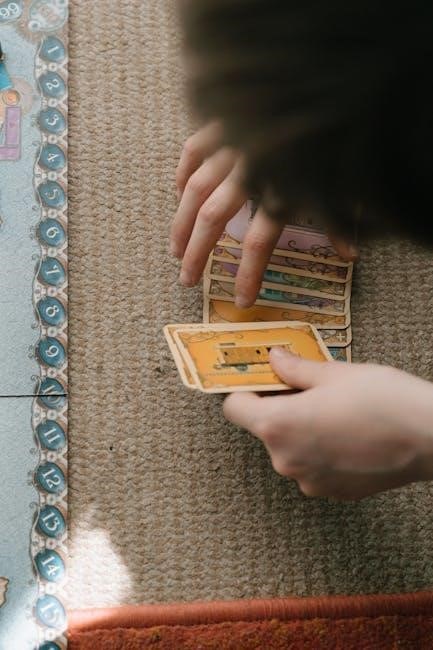
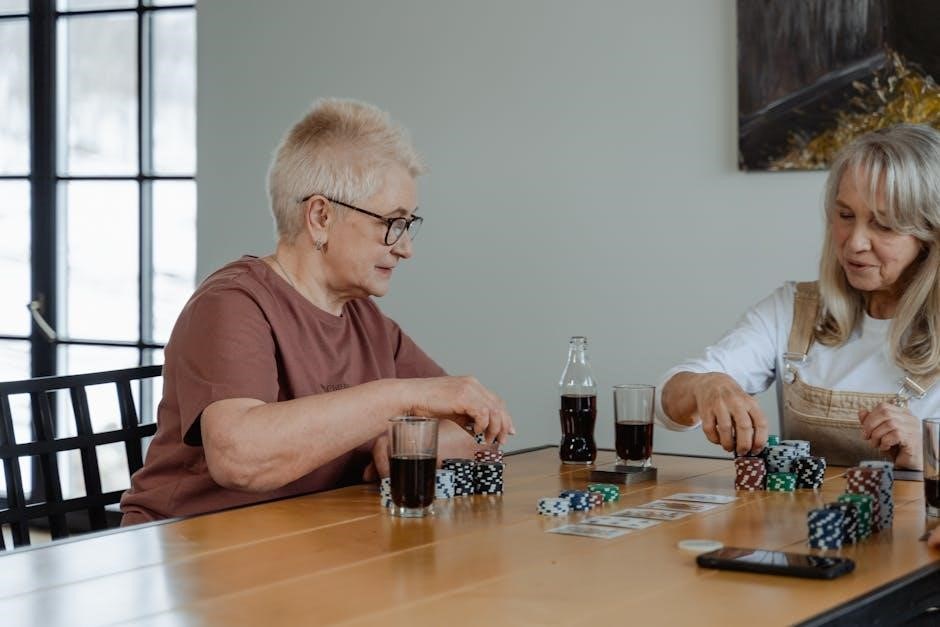
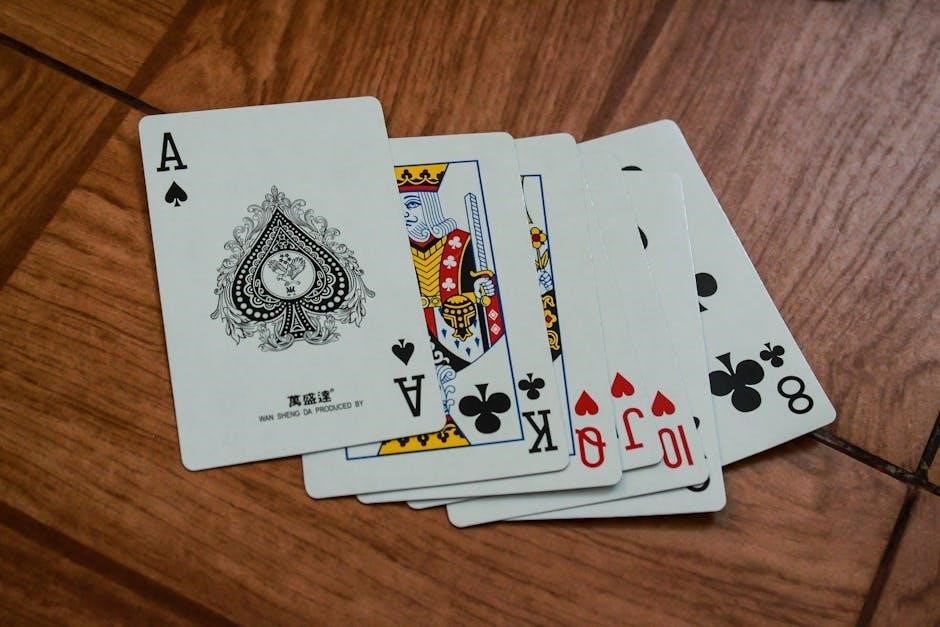
The heart of Old Maid lies in the simple yet strategic process of forming matching pairs. Players take turns examining their hands‚ seeking cards that share the same rank – for example‚ two Kings‚ two 7s‚ or two Aces. When a pair is identified‚ the player lays it face up on the table‚ discarding those cards from their hand.

This continues in a clockwise direction‚ with each player attempting to create and discard pairs; The goal is to be the first to empty your hand‚ skillfully eliminating matches as they appear. However‚ the game isn’t solely about finding pairs; it’s also about avoiding the dreaded Old Maid!

When a player cannot form a pair from their current hand‚ they must draw a card from an opponent. This introduces an element of chance and strategy‚ as players attempt to deduce which opponents might hold the matching card they need – or‚ conversely‚ avoid drawing the Old Maid herself!

How to Make a Match

Creating a match in Old Maid is straightforward: identify two cards within your hand that possess the same rank. This means both cards must share the same numerical value or face card designation (Jack‚ Queen‚ King‚ or Ace). Suit is irrelevant when forming a pair; a King of Hearts can be matched with a King of Spades‚ for instance.

Once a matching pair is found‚ immediately lay them face up on the table in front of you. This signifies that those cards are no longer in play and removes them from your hand. Continue scanning your remaining cards for further matches‚ diligently working to reduce your hand size.

Remember‚ the quicker you discard pairs‚ the lower your chances of being stuck with the Old Maid. Strategic observation of opponents’ discards can also provide clues about potential matches they might be seeking‚ influencing your drawing decisions. The core principle is simple: match rank‚ discard‚ and repeat!

Drawing Cards from Opponents

When you find yourself unable to make a match from your current hand‚ the next step is to draw a card from an opponent. You may choose any player to draw from‚ but strategic selection is key. The goal is to acquire a card that will complete a pair in your hand.

To draw‚ simply ask the chosen opponent if they have a card of a specific rank that you need. For example‚ “Do you have any Queens?” You are not permitted to ask for a specific suit. The opponent must hand over one card of the requested rank if they possess it.

If the opponent has multiple cards of that rank‚ they get to choose which one to give you. This element of choice adds a layer of strategy‚ as they might give you a less useful card. Continue drawing from opponents until you can successfully create a match in your hand‚ then discard the pair.

The Importance of Strategic Drawing

Strategic drawing is paramount to success in Old Maid. Randomly selecting opponents to draw from can quickly lead to acquiring the unwanted Old Maid card. Observe your fellow players carefully! Pay attention to the cards they discard – this provides clues about their hand composition.

If a player consistently discards cards of a particular rank‚ they likely have multiple cards of that rank. Avoid drawing from them if you need that rank‚ as they’ll likely give you a less desirable card. Conversely‚ if a player hasn’t discarded any cards of a specific rank for a while‚ they might not have any‚ making them a safer choice to draw from.

Consider the number of players remaining. As the game progresses‚ the odds of drawing the Old Maid increase. Adjust your strategy accordingly‚ becoming more cautious in your selections. Remember‚ the goal isn’t just to get rid of cards‚ but to avoid being the last player holding the unmatched card!

When Can You Draw?

A player is permitted to draw a card from an opponent only after they have exhausted all possible matches in their own hand. This means you must first attempt to pair up all cards of the same rank within your possession before initiating a draw. It’s crucial to thoroughly scan your hand before looking to others.

Once you’ve made all possible matches‚ you select an opponent – strategically‚ as discussed previously – and request a card from their hand. The opponent must offer a card to you at random; they are not allowed to choose which card they give. You then add the drawn card to your hand and immediately check if it creates a new match.

If a new match is formed‚ discard the pair. Continue this process – matching‚ then drawing – until only one player remains with the Old Maid. Remember‚ drawing is a reactive action‚ triggered by the inability to make further matches in your own hand.

The Losing Player: Identifying the Old Maid

The game culminates when all players‚ except one‚ have successfully formed matching pairs. The solitary player left holding a single unmatched card is declared the loser – and is identified as the “Old Maid.” This unfortunate player is then playfully subjected to good-natured ribbing from the other participants‚ a tradition stemming from the game’s historical roots.

Traditionally‚ players will collectively announce “Old Maid!” upon the identification of the losing player‚ emphasizing their status. This declaration serves as a lighthearted conclusion to the round; The player holding the Old Maid card doesn’t win‚ but they do get to start the next round‚ dealing the cards to everyone.

It’s important to remember that the Old Maid isn’t necessarily a negative label; it’s simply a designation for the player who couldn’t pair their cards in that particular round. The game’s charm lies in its social interaction and playful competition.

Calling “Old Maid!”

The phrase “Old Maid!” isn’t uttered during gameplay‚ but rather as a celebratory declaration at the very end‚ once the losing player has been definitively identified. This vocal announcement serves as a playful acknowledgement of who is left with the unmatched card‚ solidifying their temporary “status” within the group.

Typically‚ all players except the one holding the Old Maid will join in the chorus of “Old Maid!”‚ creating a lighthearted and communal moment. It’s a tradition rooted in the game’s history and adds to the social enjoyment. The tone is always meant to be friendly and teasing‚ never malicious.

The act of calling “Old Maid!” signals the conclusion of that particular round. It’s a clear indicator that the game is pausing momentarily before a new round begins‚ with the previous Old Maid often taking on the role of the dealer for the next hand.

Variations in Gameplay

While the core principle of matching pairs remains constant‚ Old Maid boasts several enjoyable variations to spice up the experience. A common adjustment involves altering the matching criteria; instead of simply matching ranks‚ players might be required to match both rank and suit for a valid pair‚ increasing the challenge.

Another popular modification introduces a Joker into the deck. This Joker can act as a wild card‚ capable of completing any pair‚ but also carries the risk of becoming the dreaded Old Maid itself! This adds an element of unpredictability and strategic decision-making.

Furthermore‚ players can experiment with removing different cards from the deck before dealing. While traditionally a Queen is designated as the Old Maid‚ removing three Queens and leaving one adds a twist. Alternatively‚ a Jack or any other card can be chosen for removal‚ offering diverse gameplay experiences.

Matching by Rank and Suit

A compelling variation elevates the difficulty of Old Maid by demanding more precise matching. Instead of simply pairing cards of the same rank – for example‚ two Kings – players must now match both the rank and the suit. This means only two identical cards‚ like the King of Hearts and another King of Hearts‚ constitute a valid pair.

This adjustment significantly alters the gameplay dynamic. The probability of finding a complete match decreases‚ extending the game and intensifying the strategic element. Players must carefully consider which cards to discard and from whom to draw‚ as a seemingly harmless draw could leave them with an unmatchable card.

This stricter matching rule encourages more thoughtful play and increases the tension as the game progresses. It transforms Old Maid from a relatively simple matching game into a more challenging and engaging experience‚ demanding greater attention to detail and a bit of luck!

Adding a Joker to the Deck

Introducing a Joker into the Old Maid deck injects an element of unpredictability and heightened risk. Typically‚ after removing a Queen to designate the “Old Maid‚” a single Joker is added back into the shuffled deck. This transforms the Joker into a wild card with a unique role in the game.

The Joker can be played as a substitute for any other card‚ allowing a player to complete a pair when they otherwise couldn’t. However‚ possessing the Joker at the game’s conclusion is even more undesirable than holding the Old Maid! It often carries a heavier penalty‚ such as losing multiple rounds or facing a more significant disadvantage in subsequent games.

This addition dramatically increases the strategic depth. Players must weigh the benefits of using the Joker to avoid immediate loss against the potential consequences of being stuck with it when the final draw occurs. It adds a thrilling layer of bluffing and calculated risk to the classic Old Maid experience.

Scoring and Winning

Traditionally‚ Old Maid isn’t a game focused on complex scoring systems. The primary objective is simply to avoid being the player left holding the Old Maid card – the unmatched Queen – at the end of a round. The player stuck with the Old Maid is generally considered the loser of that particular hand.

However‚ variations exist to introduce scoring. A common method awards one point to the player who successfully passes the Old Maid to another player. Alternatively‚ players can accumulate points for each card they successfully discard by making matches. The player with the fewest points after a predetermined number of rounds‚ or when a target score is reached‚ is declared the overall winner.

For multi-round games‚ keeping track of who receives the Old Maid each round can also serve as a simple scoring mechanism. The player who receives the Old Maid the fewest times throughout the entire game is often crowned the champion. The scoring method should be agreed upon before the game begins!

Multiple Rounds and Overall Winner

Old Maid is frequently played over several rounds to enhance the enjoyment and determine a definitive overall winner. After each round concludes with a player being designated the “Old Maid‚” the cards are gathered‚ shuffled thoroughly‚ and redistributed for a fresh start. This cyclical process continues until a predetermined number of rounds have been completed‚ or a consensus is reached to end the game.

To establish an overall winner‚ a scoring system is typically implemented. As mentioned previously‚ points can be awarded for avoiding the Old Maid‚ or conversely‚ assigned to the unfortunate player who ends up with it each round. Alternatively‚ players can tally the number of times they’ve been the Old Maid throughout all rounds; the player with the lowest count is then declared the victor.

The number of rounds played is often decided beforehand‚ ensuring a fair and balanced competition. This allows for strategic adjustments and a more engaging experience as players learn to anticipate their opponents’ moves.

pizza hut franchise agreement pdf

Pizza Hut Franchise Agreement: A Comprehensive Overview

Navigating the Pizza Hut franchise landscape requires a detailed understanding of the legal document; a current Pizza Hut franchise agreement PDF is essential for prospective owners.

Embarking on a Pizza Hut franchise journey presents a compelling business venture, steeped in brand recognition and a proven operational model. However, success hinges on a thorough comprehension of the governing legal framework – the Pizza Hut Franchise Agreement. This document, often accessed as a Pizza Hut franchise agreement PDF, details the rights, responsibilities, and obligations of both the franchisor (Pizza Hut) and the franchisee.

Carefully reviewing this PDF is paramount before making any investment decisions. It outlines crucial aspects like territory rights, financial commitments, operational standards, and the terms of the franchise relationship. Understanding the intricacies within the agreement ensures prospective franchisees are fully informed and prepared for the challenges and rewards of owning a Pizza Hut restaurant.

Initial Investment & Costs

A significant portion of evaluating the Pizza Hut franchise opportunity involves scrutinizing the financial commitments detailed within the Pizza Hut franchise agreement PDF. This document meticulously breaks down all initial investment costs, extending far beyond the initial franchise fee. Prospective franchisees must analyze expenses such as real estate acquisition or leasehold improvements, equipment purchases, initial inventory, and pre-opening marketing expenditures.

The PDF will also outline ongoing costs, including royalty fees and advertising contributions. A realistic assessment of these figures, as presented in the agreement, is crucial for developing a sound business plan and securing adequate financing. Ignoring these details can lead to unforeseen financial strain.

2.1 Franchise Fee Breakdown

The Pizza Hut franchise agreement PDF provides a detailed accounting of the franchise fee, a crucial upfront cost for aspiring owners. This isn’t a single, monolithic payment; the document clarifies what this fee encompasses. Typically, it covers the franchisee’s right to utilize the Pizza Hut brand, access to their operational systems, and initial training programs.

The PDF will specify if the fee is refundable, and under what circumstances. It also details the payment schedule – whether it’s a lump sum or structured installments. Understanding this breakdown is vital for accurate financial projections and avoiding misunderstandings regarding the value received for this substantial investment.

2.2 Estimated Total Investment Range

The Pizza Hut franchise agreement PDF outlines the estimated total investment required to launch and operate a franchise. This figure extends far beyond the initial franchise fee, encompassing a wide array of costs. Expect to find details on real estate (leasehold improvements or purchase), equipment – ovens, refrigerators, point-of-sale systems – signage, initial inventory, and pre-opening marketing expenses.

The PDF will present a range, acknowledging variations based on location and restaurant size. It’s crucial to carefully review this range and understand all contributing factors to accurately assess financial feasibility and secure adequate funding. Ignoring these costs can lead to significant financial strain.

Territory & Location

The Pizza Hut franchise agreement PDF meticulously details territory rights and location stipulations. Prospective franchisees will find information regarding the exclusivity granted within a defined geographic area, though this isn’t always absolute. The document clarifies whether territories are protected from competing Pizza Hut locations, and the criteria for approval of a proposed site.

Expect detailed site selection guidelines, covering demographics, traffic patterns, visibility, and accessibility. Pizza Hut maintains significant control over location approval, ensuring brand standards are upheld. The PDF outlines the process for submitting potential locations and the factors influencing their acceptance or rejection.

3.1 Territory Rights & Exclusivity

The Pizza Hut franchise agreement PDF explicitly defines the scope of territorial rights granted to each franchisee. While often described as “exclusive,” the level of protection varies. The document details whether exclusivity prevents other Pizza Hut restaurants from opening within the designated area, and any exceptions to this rule.

Carefully review clauses regarding encroachment, outlining scenarios where Pizza Hut might approve a competing location despite the exclusivity agreement. The PDF will specify the conditions under which Pizza Hut can develop alternative channels, like delivery-only kitchens, within the franchisee’s territory.

3.2 Site Selection Criteria & Approval Process

The Pizza Hut franchise agreement PDF outlines stringent site selection criteria, crucial for maximizing success. It details required demographics, traffic patterns, visibility, and accessibility standards for potential locations. Franchisees don’t have unilateral approval; proposed sites must meet Pizza Hut’s pre-defined specifications.

The PDF meticulously describes the approval process, typically involving submission of site details, demographic reports, and potentially a market analysis. Pizza Hut reserves the right to reject any proposed location, even if it meets initial criteria, based on broader strategic considerations. Understanding this process is vital before investing.

Franchise Agreement Term & Renewal

The Pizza Hut franchise agreement PDF clearly defines the initial term length of the franchise, typically spanning 20 years, though specifics can vary. It details conditions for potential renewal, emphasizing consistent adherence to brand standards and operational guidelines throughout the initial period.

Renewal isn’t automatic; the PDF outlines specific performance metrics franchisees must achieve. It also specifies any required renovations or upgrades to meet current brand image standards. Franchisees should carefully review the renewal clauses within the PDF to understand obligations and associated costs well in advance of the term’s expiration.

4.1 Initial Term Length

The Pizza Hut franchise agreement PDF stipulates a standard initial term of 20 years for most franchise locations, providing a substantial period for investment return and business establishment. However, the precise term can be subject to negotiation and may differ based on location and specific agreement terms.

The PDF details the commencement date of the term, typically linked to the restaurant’s opening date or a specified construction milestone; Franchisees must understand this timeline for compliance with agreement obligations. Careful review of the PDF is crucial to confirm the exact initial term length applicable to their specific franchise.

4.2 Renewal Options & Requirements

The Pizza Hut franchise agreement PDF generally offers franchisees the opportunity to renew their franchise term, typically for an additional term of 10 or 20 years, contingent upon fulfilling specific requirements. These requirements, detailed within the PDF, often include demonstrating consistent operational compliance, maintaining brand standards, and achieving satisfactory performance metrics.

Renewal isn’t automatic; franchisees must submit a formal renewal application well in advance of the term’s expiration, as outlined in the PDF. The agreement also specifies potential renewal fees and any required renovations or upgrades to meet current brand standards. Thorough review of the PDF is vital for a successful renewal.

Operational Standards & Training

The Pizza Hut franchise agreement PDF meticulously details the stringent operational standards franchisees must adhere to, covering everything from food preparation and safety protocols to customer service expectations and restaurant cleanliness. Initial and ongoing training programs, comprehensively described within the PDF, are mandatory for all franchisees and their staff.

These programs cover various aspects of restaurant management, including pizza making techniques, inventory control, and marketing strategies. The PDF emphasizes Pizza Hut’s commitment to quality control and brand consistency, outlining regular inspections and audits to ensure compliance with established standards.

5.1 Mandatory Training Programs

The Pizza Hut franchise agreement PDF explicitly outlines several mandatory training programs for franchisees and their designated managers. These programs, detailed within the document, cover crucial areas like food safety certification, pizza preparation techniques adhering to Pizza Hut’s recipes, and proper operation of kitchen equipment.

Furthermore, the PDF specifies training modules focused on customer service excellence, point-of-sale system proficiency, and effective team leadership. Completion of these programs is a prerequisite for franchise operation and ongoing compliance is regularly assessed. The agreement PDF also details the location and duration of these essential training sessions.

5.2 Quality Control & Brand Standards

The Pizza Hut franchise agreement PDF dedicates significant sections to maintaining stringent quality control and upholding consistent brand standards across all locations. It details specific requirements for ingredient sourcing, food preparation procedures, and restaurant cleanliness, ensuring a uniform customer experience.

The PDF outlines regular inspections conducted by Pizza Hut representatives to verify compliance with these standards. It also specifies acceptable variations in product presentation and service delivery. Failure to meet these standards, as detailed in the agreement PDF, can result in corrective action plans or even franchise termination.

Royalties & Marketing Fees

The Pizza Hut franchise agreement PDF meticulously outlines the royalty and marketing fee structure franchisees must adhere to. Typically, royalties are calculated as a percentage of gross sales, detailed within the PDF, and are paid regularly to Pizza Hut for brand usage and support.

Furthermore, the agreement PDF specifies contributions to national and local marketing funds. These funds are utilized for advertising campaigns, promotional activities, and brand development initiatives. The PDF clarifies how these fees are allocated and the franchisee’s involvement in marketing decisions.

6.1 Royalty Payment Structure

The Pizza Hut franchise agreement PDF clearly defines the royalty payment structure, generally expressed as a percentage of weekly or monthly gross sales. This percentage, precisely stated in the PDF, represents compensation for the continued use of the Pizza Hut brand, operating system, and ongoing support.

Detailed within the PDF are specifics regarding reporting procedures, payment deadlines, and accepted methods of remittance. Franchisees must meticulously track sales and submit accurate reports as outlined. The agreement PDF also addresses potential penalties for late or inaccurate royalty payments, ensuring consistent revenue flow to Pizza Hut.

6.2 National & Local Marketing Contributions

The Pizza Hut franchise agreement PDF outlines mandatory contributions franchisees must make towards both national and local marketing initiatives. A percentage of gross sales, detailed within the PDF, is allocated to a national fund managed by Pizza Hut for brand-wide advertising campaigns and promotional activities.

Furthermore, the PDF specifies requirements for local marketing spend, often a separate percentage, empowering franchisees to execute targeted campaigns within their designated territories. These local efforts, guided by brand standards detailed in the PDF, aim to drive traffic and build community engagement. Compliance with these contribution requirements is strictly enforced.

Agreement Restrictions & Obligations

The Pizza Hut franchise agreement PDF meticulously details numerous restrictions and obligations imposed upon franchisees. It governs aspects like operational procedures, menu adherence, and quality control standards, ensuring brand consistency. The PDF restricts franchisees from offering competing products or operating similar businesses concurrently.

Furthermore, it outlines obligations regarding store appearance, cleanliness, and customer service. Franchisees must comply with all applicable laws and regulations. The PDF also specifies reporting requirements and the consequences of non-compliance, including potential penalties or even termination of the franchise agreement. Careful review is crucial.

7.1 Approved Suppliers & Product Specifications

The Pizza Hut franchise agreement PDF comprehensively lists approved suppliers for all ingredients and materials, dictating where franchisees must source their products. This ensures consistent quality and adherence to brand standards across all locations. The PDF details precise product specifications – from dough composition to sauce recipes – leaving little room for variation.

Franchisees are obligated to use only these approved suppliers and follow the specified recipes exactly. Deviations are strictly prohibited and can result in penalties. The PDF often includes detailed information on portion sizes, preparation methods, and presentation guidelines, reinforcing uniformity and brand control.

7.2 Operational Compliance & Inspections

The Pizza Hut franchise agreement PDF outlines rigorous operational standards covering everything from cleanliness and food safety to customer service and employee training. Franchisees must adhere to these standards to maintain brand reputation and quality. The PDF details Pizza Hut’s right to conduct regular, unannounced inspections of franchise locations;

These inspections assess compliance with all aspects of the agreement, and any deficiencies noted will require prompt corrective action. The PDF specifies a grading system and potential consequences for non-compliance, ranging from warnings to potential termination of the franchise agreement. Maintaining a high operational score is crucial for continued success.

Transfer & Assignment of Franchise

The Pizza Hut franchise agreement PDF meticulously details the process for transferring or assigning ownership of the franchise. Generally, transferring requires Pizza Hut’s prior written consent, which is not to be unreasonably withheld, as outlined in the PDF. A prospective buyer must meet stringent qualifications, including financial stability and operational experience.

The PDF specifies required documentation, such as financial statements and a detailed business plan. Pizza Hut retains a ‘Right of First Refusal,’ meaning they can match any bona fide offer and purchase the franchise themselves. Transfer fees, as detailed within the PDF, are also applicable, ensuring a smooth and legally sound transition of ownership.

8.1 Conditions for Franchise Transfer

The Pizza Hut franchise agreement PDF clearly outlines several conditions for a successful franchise transfer. Potential franchisees must demonstrate sufficient financial resources, proven business acumen, and a commitment to upholding brand standards, all detailed within the PDF. A comprehensive training program completion by the new operator is typically mandatory, as specified in the PDF.

Furthermore, the PDF stipulates a thorough background check and a review of the applicant’s operational experience. Existing lease agreements must be transferable, and the new franchisee must agree to assume all obligations under the existing franchise agreement, as documented in the PDF. Approval hinges on meeting these criteria.

8.2 Pizza Hut’s Right of First Refusal

The Pizza Hut franchise agreement PDF explicitly grants Pizza Hut a right of first refusal in any proposed franchise transfer. This means if a franchisee intends to sell their location, they must first offer it to Pizza Hut on the same terms offered to a third-party buyer, as detailed in the PDF.

This provision, clearly stated within the PDF, allows Pizza Hut to maintain control over who operates under its brand. Franchisees must provide Pizza Hut with a Notice of Intent to Sell, including all offer details, as outlined in the PDF. Pizza Hut then has a specified timeframe to either match the offer or decline, protecting brand consistency.

Termination & Dispute Resolution

The Pizza Hut franchise agreement PDF meticulously outlines conditions leading to termination, ranging from operational failures to breaches of contract, all detailed within the PDF. It also specifies procedures for dispute resolution, prioritizing mediation before arbitration or litigation, as explained in the PDF.

Franchisees should carefully review these sections in the PDF. The agreement details Pizza Hut’s rights to terminate, and a franchisee’s recourse. Understanding these clauses, found within the PDF, is crucial. The PDF emphasizes a good-faith effort to resolve conflicts amicably, minimizing costly legal battles and preserving the brand’s reputation.

9.1 Grounds for Termination by Pizza Hut

The Pizza Hut franchise agreement PDF clearly defines numerous grounds for termination initiated by Pizza Hut, including failure to adhere to operational standards detailed within the PDF. Significant breaches of the agreement, such as non-payment of royalties (outlined in the PDF), or misrepresentation of the brand, are also causes.

Furthermore, the PDF specifies that consistent failure to meet quality control benchmarks, or bankruptcy filing, can lead to termination. Pizza Hut reserves the right to terminate for actions damaging the brand’s reputation, as described in the PDF. Franchisees must understand these stipulations detailed in the PDF to avoid potential loss of their investment.

9.2 Dispute Resolution Mechanisms (Mediation/Arbitration)

The Pizza Hut franchise agreement PDF outlines a multi-step dispute resolution process. Initially, franchisees and Pizza Hut are encouraged to resolve issues through good-faith negotiation. If unresolved, the PDF mandates mediation, utilizing a mutually agreed-upon mediator to facilitate a settlement.

Should mediation fail, the PDF specifies binding arbitration as the final recourse, conducted under the rules of a designated arbitration association. Court litigation is generally restricted, as detailed in the PDF. Understanding these procedures, clearly laid out in the PDF, is crucial for franchisees facing disagreements, ensuring a structured and potentially less costly resolution process.