
The Crucible Act 3: A Comprehensive Analysis
Act 3 dramatically unfolds within the Salem meeting house‚ centering on pivotal court proceedings and accusations.
This section explores themes of guilt‚ integrity‚ and the desperate pursuit of truth amidst escalating hysteria.
Proctor’s courageous‚ yet ultimately tragic‚ attempt to expose Abigail’s deceit defines this crucial act.
Key events include Martha Corey’s interrogation‚ Giles Corey’s defiant confrontation‚ and Mary Warren’s volatile testimony.
The act’s climax showcases Proctor’s confession of adultery‚ a sacrifice intended to dismantle Abigail’s manipulative power.
Analyzing this act reveals the power dynamics within the courtroom and the turning point of the play’s narrative.
Resources like online summaries and chapter analyses offer deeper insights into Miller’s masterful storytelling.
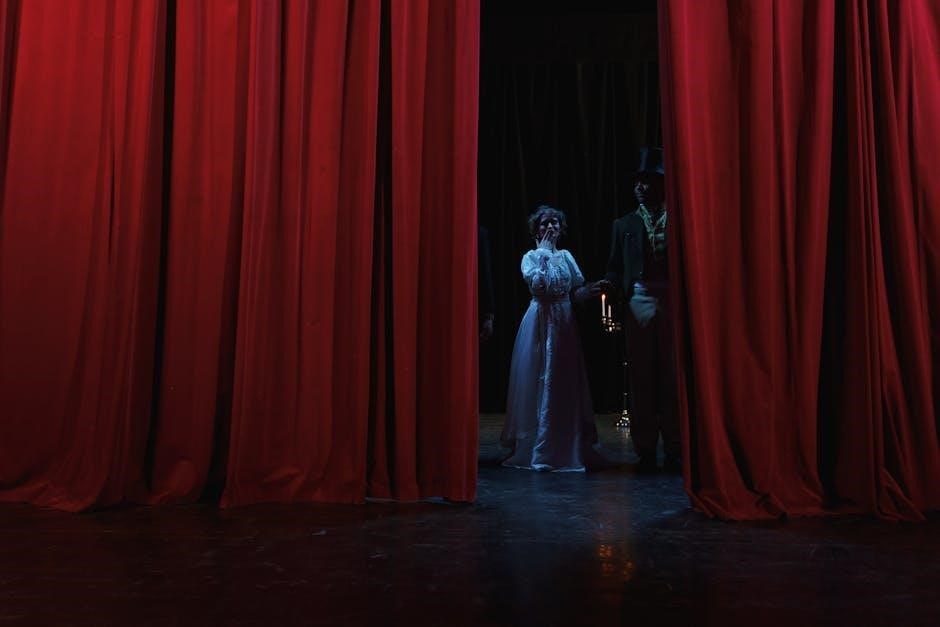
Overview of Act 3
Act 3 of Arthur Miller’s The Crucible represents a dramatic escalation of the Salem witch trials‚ shifting from private accusations to a full-blown‚ public courtroom battle. The act is largely consumed by the proceedings intended to determine guilt or innocence‚ though the very definition of those terms becomes increasingly distorted by the prevailing hysteria.
Central to this act is John Proctor’s desperate attempt to expose Abigail Williams’s fraudulent claims. He brings forth Mary Warren‚ hoping she will confess to fabricating the evidence of witchcraft. However‚ Abigail and the other girls skillfully manipulate the court‚ turning the accusations back on Mary and ultimately‚ on Proctor himself.
The act witnesses the interrogation and condemnation of Martha Corey and the defiant‚ yet ultimately fatal‚ stance taken by Giles Corey. Proctor’s confession of his affair with Abigail‚ intended to discredit her‚ backfires spectacularly‚ damaging his own reputation and fueling the court’s suspicions. Act 3 marks a critical turning point‚ solidifying the tragic trajectory of the play and highlighting the devastating consequences of unchecked power and mass hysteria.
It’s a pivotal section for understanding the play’s core themes.
Setting and Atmosphere
Act 3 of The Crucible is almost entirely confined to the meeting house in Salem‚ Massachusetts‚ now functioning as a courtroom. This single location amplifies the claustrophobic and oppressive atmosphere‚ mirroring the increasingly constricted lives of the accused and the community as a whole. The starkness of the setting – a functional‚ communal space – contrasts sharply with the extraordinary claims being made within its walls.
The atmosphere is thick with tension‚ suspicion‚ and religious fervor. Deputy Governor Danforth’s presence contributes to a sense of rigid authority and unwavering belief in the court’s legitimacy. The air is charged with the girls’ dramatic displays and the desperate pleas of the accused.
Miller masterfully uses the setting to emphasize the public nature of the trials and the pressure to conform. The constant scrutiny and the weight of communal judgment create a palpable sense of dread. The meeting house‚ intended as a place of governance‚ becomes a stage for manipulation‚ deceit‚ and the erosion of individual rights‚ fostering an environment of fear and paranoia.
The setting directly impacts the unfolding drama.
Key Characters Introduced or Developed in Act 3
While no entirely new characters are introduced in Act 3‚ several experience significant development. Deputy Governor Danforth emerges as a central figure‚ embodying the inflexible authority of the court and his unwavering belief in his own judgment. He’s less a seeker of truth and more a defender of the court’s power.
Mary Warren undergoes a particularly dramatic arc. Initially attempting to expose the fraud‚ she crumbles under pressure‚ reverting to the group hysteria and ultimately betraying John Proctor. Her fragility and susceptibility to Abigail’s influence are starkly revealed.
Giles Corey’s character is powerfully developed through his defiant resistance to the court. His refusal to enter a plea‚ choosing instead to be pressed to death‚ demonstrates unwavering integrity and a condemnation of the proceedings.
John Proctor’s internal conflict intensifies as he desperately attempts to save Elizabeth and expose Abigail. His willingness to sacrifice his reputation highlights his growing moral courage. Abigail Williams further solidifies her role as the manipulative instigator‚ expertly exploiting the court’s fears.
The Court Proceedings: Initial Accusations
Act 3 opens with intense court proceedings focused on the accusations against Martha Corey. She is questioned regarding her alleged association with the Devil‚ specifically concerning the spectral evidence presented by Ann Putnam and Abigail Williams. The accusations are vague and based on the girls’ claims of being tormented by Corey’s spirit.
The court‚ presided over by Deputy Governor Danforth and Reverend Hale‚ initially attempts a semblance of due process‚ but quickly prioritizes upholding the court’s authority. Danforth demands a confession‚ dismissing any doubts or alternative explanations. The proceedings are characterized by a rigid adherence to spectral evidence‚ which is accepted without substantial proof.
These initial accusations set the stage for the escalating tension and the subsequent confrontations. The court’s willingness to accept the girls’ testimonies as irrefutable truth establishes a dangerous precedent‚ paving the way for further false accusations and the tragic events that unfold. The atmosphere is thick with fear and suspicion‚ fueled by the girls’ dramatic displays.
Martha Corey’s Testimony and Interrogation
Martha Corey’s interrogation is a stark portrayal of the court’s injustice and the absurdity of the accusations. She is accused of witchcraft based largely on the claims of Abigail Williams and other afflicted girls‚ who allege that Corey’s spirit torments them. Martha maintains her innocence‚ vehemently denying any involvement with the Devil.
Her testimony is met with skepticism and hostility by Deputy Governor Danforth‚ who pressures her to confess. He focuses on her perceived lack of religious devotion and her independent spirit as evidence of her guilt. The court attempts to trap her with questions about her relationship with Goody Osburn‚ another accused witch.
Martha’s calm and rational demeanor contrasts sharply with the hysterical outbursts of the girls‚ yet her logic is dismissed. The interrogation highlights the court’s reliance on spectral evidence and its unwillingness to consider alternative explanations. Her steadfast refusal to confess ultimately seals her fate‚ demonstrating the court’s determination to find guilt‚ regardless of innocence.

Giles Corey’s Confrontation with the Court
Giles Corey’s appearance in court is a defiant act of resistance against the escalating injustice; He arrives to defend his wife‚ Martha‚ who is accused of witchcraft‚ and challenges the validity of the accusations brought against her. Corey’s interrogation quickly becomes a battle of wills with Deputy Governor Danforth‚ as he attempts to introduce evidence of the girls’ fraudulent behavior.
Corey reveals that Thomas Putnam instigated the accusations to acquire land from those accused‚ exposing a potential motive for the witch hunt. However‚ Danforth refuses to accept this evidence‚ dismissing it as hearsay and focusing instead on Corey’s own perceived disrespect for the court. When asked if he has any confession to make‚ Corey refuses to enter a plea.
This leads to an agonizing and brutal form of torture – pressing – where weights are piled upon Corey’s chest in an attempt to force a confession. He famously cries out‚ “More weight!” choosing to die rather than falsely confess or implicate others‚ becoming a symbol of unwavering integrity and resistance against tyranny.
Proctor’s Testimony and Attempt to Expose Abigail
John Proctor’s testimony marks a desperate turning point in Act 3‚ representing his courageous attempt to dismantle Abigail Williams’ deceit. Driven by guilt over his past affair and a desire to save his wife‚ Elizabeth‚ Proctor brings forth Mary Warren‚ hoping she will confess the girls’ fabricated accusations.
He presents evidence of Abigail’s motive – her desire for his affection – and reveals their previous adulterous relationship to the court‚ a confession that shatters his reputation. This act of self-revelation is intended to demonstrate Abigail’s dishonesty and expose her manipulation of the other girls. However‚ Deputy Governor Danforth focuses intensely on the adultery‚ viewing it as a moral failing that undermines Proctor’s credibility.
Proctor’s attempt to expose Abigail is met with fierce resistance‚ as the girls‚ led by Abigail‚ skillfully turn the accusations back on him‚ claiming he is the one consorting with the Devil. His efforts‚ though valiant‚ are ultimately thwarted by Abigail’s cunning and the court’s unwavering belief in her fabricated claims.
Mary Warren’s Confession and Recantation
Mary Warren’s journey in Act 3 is one of immense internal conflict and ultimately‚ devastating failure. Initially‚ she bravely attempts to confess the fraudulent nature of the girls’ accusations‚ corroborating John Proctor’s claims that the fits are fabricated. She admits that she and the other girls pretended to be afflicted‚ driven by a desire for attention and freedom from consequences.
However‚ under intense pressure from Abigail Williams and the other girls‚ Mary Warren quickly succumbs to their manipulation. Faced with their collective hysteria and threats‚ she dramatically recants her confession‚ reverting to her previous testimony and accusing John Proctor of forcing her to lie.
This recantation is a pivotal moment‚ demonstrating the overwhelming power of groupthink and the girls’ ability to control the narrative. Mary’s weakness and fear highlight the dangers of mass hysteria and the fragility of truth in the face of societal pressure. Her betrayal seals Proctor’s fate and intensifies the tragedy unfolding in Salem.

The Significance of Proctor’s Confession of Adultery
John Proctor’s confession of his affair with Abigail Williams in Act 3 is a monumental turning point‚ driven by a desperate attempt to discredit her and expose the lies fueling the Salem witch trials. He believes revealing his sin‚ despite the immense personal cost‚ will demonstrate Abigail’s vengeful and manipulative character‚ proving she falsely accuses others to maintain her power.
This confession isn’t merely about revealing a past transgression; it’s a sacrifice of his reputation and standing in the community. He willingly subjects himself to public humiliation‚ hoping to outweigh the damage caused by Abigail’s deceit. However‚ the court‚ particularly Deputy Governor Danforth‚ focuses more on Proctor’s moral failing than on the validity of Abigail’s claims.
The confession ultimately backfires‚ as it’s used to question Proctor’s own character and integrity‚ rather than expose Abigail’s. It underscores the play’s themes of hypocrisy and the dangers of prioritizing reputation over truth‚ highlighting the rigid moral standards of Salem society.
Abigail’s Manipulation and Deception
Act 3 showcases the full extent of Abigail Williams’ masterful manipulation and calculated deception. When confronted with John Proctor’s accusations and the attempt to expose her lies‚ she swiftly and convincingly pivots‚ turning the accusations back on him and claiming he’s attempting to overthrow the court. This demonstrates her chilling ability to control the narrative and exploit the prevailing hysteria.
Abigail expertly utilizes the fear of the supernatural‚ feigning possession and accusing Mary Warren of sending her spirit to torment the other girls. This performance‚ flawlessly executed‚ compels the other girls to join her charade‚ reinforcing the illusion of witchcraft and solidifying her control over them.
Her deception isn’t simply about avoiding punishment; it’s about maintaining her power and reclaiming her desired position within the community. Abigail’s manipulation highlights the dangers of unchecked authority and the devastating consequences of mass hysteria fueled by false accusations and personal vendettas.
The Girls’ Reactions to Proctor’s Accusations
Proctor’s desperate attempt to discredit Abigail in Act 3 elicits a remarkably unified and chilling response from the other girls. Initially‚ they feign shock and innocence‚ mirroring Abigail’s carefully constructed facade. However‚ when Proctor presents evidence of their deception‚ they swiftly and collectively turn against him‚ launching a coordinated counter-attack.
Led by Abigail‚ the girls begin to scream and contort‚ claiming Proctor is attacking them with his spirit. This dramatic display of “possession” effectively shifts the focus away from their own lies and onto Proctor’s supposed wickedness. Their synchronized performance‚ a testament to Abigail’s control‚ overwhelms the court and reinforces the prevailing belief in witchcraft.

The girls’ reactions aren’t merely defensive; they are actively aggressive‚ fueled by fear of exposure and a desire to maintain their newfound power. This collective hysteria demonstrates the dangerous consequences of groupthink and the ease with which fear can be weaponized to silence dissent and protect the guilty.
The Role of Deputy Governor Danforth
Deputy Governor Danforth‚ arriving to oversee the trials in Act 3‚ embodies rigid authority and unwavering belief in his own judgment. He views Salem as a battleground between God and the Devil‚ and himself as a crucial instrument of divine justice. This conviction makes him resistant to any evidence that challenges the court’s legitimacy or questions the girls’ accusations.
Danforth’s primary role is to maintain order and uphold the authority of the court‚ even at the expense of truth and fairness. He is less concerned with uncovering actual witchcraft and more focused on preventing any disruption to the established proceedings. He interprets any challenge to the court as a direct attack on God’s will‚ hardening his stance against those who dare to question it.

Throughout Act 3‚ Danforth consistently prioritizes the court’s reputation over individual lives‚ dismissing Proctor’s evidence and clinging to the girls’ testimonies. His inflexibility and pride ultimately contribute to the tragic outcome‚ solidifying his position as a symbol of blind faith and the dangers of unchecked power.
The Theme of Guilt and Redemption
Act 3 of The Crucible profoundly explores the intertwined themes of guilt and the elusive possibility of redemption. John Proctor is consumed by guilt over his affair with Abigail‚ a secret that fuels the play’s central conflict and ultimately drives his desperate attempts to expose her lies. His guilt isn’t merely personal; it’s compounded by the knowledge that his sin has unleashed a wave of injustice upon Salem.
Mary Warren also grapples with guilt‚ torn between her conscience and her fear of Abigail and the other girls. Her initial confession and subsequent recantation demonstrate the crushing power of societal pressure and the difficulty of choosing truth over self-preservation. The act reveals how easily guilt can be manipulated and exploited.
Proctor’s confession of adultery‚ while damaging to his reputation‚ represents a flawed attempt at redemption – a desperate bid to reclaim his integrity and save his wife. However‚ the court’s refusal to accept his honesty underscores the play’s tragic message: true redemption may be unattainable in a society consumed by hysteria and false accusations.

Proctor’s Sacrifice of Reputation
Act 3 witnesses John Proctor’s monumental decision to sacrifice his hard-earned reputation in a desperate attempt to expose Abigail Williams’ deceit and save his wife‚ Elizabeth. Knowing the devastating consequences‚ he confesses his adultery with Abigail before the court‚ a revelation intended to shatter her credibility and reveal the motivations behind the accusations.
This act of self-destruction is not undertaken lightly. Proctor understands the societal weight of his sin and the damage it will inflict upon his standing in Salem. However‚ he prioritizes truth and justice over his own social standing‚ believing that exposing Abigail is the only way to halt the escalating hysteria and save innocent lives.
Ironically‚ his confession doesn’t achieve the desired outcome. Deputy Governor Danforth‚ focused on upholding the court’s authority‚ views Proctor’s admission as further evidence of his involvement with the devil. Despite the sacrifice‚ Proctor’s integrity shines through‚ demonstrating his commitment to honesty even in the face of overwhelming adversity. This sacrifice‚ though seemingly futile‚ ultimately defines his character.
The Concept of Integrity and Honesty
Act 3 of The Crucible profoundly explores the concepts of integrity and honesty‚ presenting them as increasingly rare and dangerous commodities within the suffocating atmosphere of Salem. John Proctor’s struggle embodies this theme; he initially prioritizes protecting his reputation‚ concealing his adultery‚ but ultimately chooses brutal honesty as a last resort.
Proctor’s confession‚ while damaging to himself‚ represents a desperate attempt to reclaim his integrity and expose the falsehoods driving the witch trials. However‚ the court‚ led by Deputy Governor Danforth‚ prioritizes maintaining its authority over seeking truth‚ demonstrating a profound lack of integrity. The girls‚ particularly Abigail Williams‚ exemplify dishonesty‚ manipulating the court with fabricated accusations.
The act highlights the devastating consequences of sacrificing honesty for self-preservation or political gain. Characters like Giles Corey‚ though ultimately silenced‚ maintain their integrity by refusing to falsely confess. The play suggests that true integrity demands courage‚ even in the face of persecution‚ and that a society built on lies is destined to crumble.
The Power Dynamics in the Courtroom
Act 3 of The Crucible vividly illustrates the deeply unbalanced power dynamics within the Salem courtroom. Deputy Governor Danforth embodies absolute authority‚ viewing himself as a direct instrument of God and dismissing any challenge to his judgment. He operates under the belief that the court is infallible‚ prioritizing order and upholding its perceived legitimacy above all else.
The accused‚ like Martha Corey and John Proctor‚ are rendered powerless‚ their pleas and evidence disregarded in favor of the accusers’ testimonies. The young girls‚ led by Abigail Williams‚ wield immense power through their fabricated accusations‚ manipulating the court and exploiting the prevailing hysteria. Their claims are accepted without scrutiny‚ effectively controlling the narrative.
Giles Corey’s attempts to present evidence are swiftly suppressed‚ demonstrating the court’s intolerance for dissent. The act reveals how fear and religious zealotry can be weaponized to consolidate power‚ silencing opposition and persecuting the innocent. This dynamic underscores the play’s broader commentary on the dangers of unchecked authority.
The Turning Point of the Play
Act 3 of The Crucible represents a definitive turning point‚ shifting the narrative from escalating accusations to a desperate‚ yet ultimately failing‚ attempt to expose the truth. John Proctor’s confession of his adultery with Abigail marks a critical moment‚ a gamble to discredit her and save his wife‚ Elizabeth.
This confession‚ while damaging to his reputation‚ is intended to demonstrate Abigail’s motive for revenge and expose her lies; However‚ it backfires spectacularly as the court prioritizes maintaining its authority over seeking justice. Abigail and the girls skillfully deflect Proctor’s accusations‚ further solidifying their power and control.
Mary Warren’s subsequent recantation and return to the group of accusers seals the fate of the accused. This act demonstrates the overwhelming power of mass hysteria and the court’s unwillingness to acknowledge the possibility of deception. From this point forward‚ the play descends into a tragic inevitability‚ with little hope remaining for the wrongly accused.
The Use of Dramatic Irony
Act 3 of The Crucible masterfully employs dramatic irony‚ heightening the tension and tragedy as the audience possesses knowledge the characters do not. We‚ as viewers‚ understand Abigail Williams’ deceit and manipulative nature‚ witnessing her orchestrate the girls’ feigned possession‚ while the court‚ particularly Deputy Governor Danforth‚ remains convinced of their genuine affliction.
This disparity creates a profound sense of frustration and foreboding. John Proctor’s attempts to expose Abigail are rendered tragically futile because the court is blinded by its own self-righteousness and fear of admitting error. The audience knows his confession of adultery‚ intended to reveal Abigail’s motive‚ will likely damage him more than her.
Furthermore‚ the girls’ seemingly innocent reactions to Proctor’s accusations are laced with dramatic irony; we recognize their calculated performance‚ while the court interprets it as proof of his wickedness. This pervasive irony underscores the play’s central theme of injustice and the dangers of unchecked authority.
Symbolism in Act 3 (e.g.‚ the poppet)
Act 3 of The Crucible is rich with symbolism‚ amplifying the play’s themes of hysteria‚ accusation‚ and the fragility of reputation. The most prominent symbol is the poppet‚ a seemingly innocent doll given to Elizabeth Proctor by Mary Warren. Its discovery with a needle inside serves as fabricated “evidence” of witchcraft‚ directly leading to Elizabeth’s arrest and fueling the escalating paranoia.
The poppet represents the power of false accusations and the ease with which innocent individuals can be condemned based on flimsy evidence. It embodies the girls’ ability to manipulate symbols and exploit the community’s fears. Beyond the poppet‚ the courtroom itself symbolizes the rigid‚ unforgiving nature of the Puritan society and the dangers of blind faith in authority.
Proctor’s signed confession‚ though intended as a means to save his life‚ ironically symbolizes the corruption of truth and the pressure to conform. Even his name‚ once respected‚ becomes tainted‚ representing the destruction of individual integrity in the face of mass hysteria.
Analysis of Key Quotes from Act 3
Act 3 delivers several powerful quotes revealing the core conflicts and themes of The Crucible. Danforth’s declaration‚ “I will bring out the truth!” is deeply ironic‚ given his unwavering belief in the girls’ fabricated testimonies and his resistance to acknowledging any possibility of deceit. This highlights the danger of self-righteousness and the distortion of justice.
Proctor’s desperate plea‚ “How do you bargain with a corpse?” underscores the futility of attempting reason with a system consumed by irrational fear and vengeance. His statement reveals his growing desperation and his understanding of the court’s inflexibility. Abigail’s chilling response to Proctor’s accusation‚ feigning possession and crying out against him‚ demonstrates her masterful manipulation and control.
Giles Corey’s defiant “More weight!” as he’s pressed under stones symbolizes his unwavering integrity and refusal to participate in the court’s charade‚ even at the cost of his life. These quotes collectively expose the play’s central message: the devastating consequences of mass hysteria and the importance of individual conscience.
The Impact of Act 3 on the Overall Narrative
Act 3 serves as the undeniable turning point in The Crucible‚ irrevocably shifting the narrative from a simmering tension to a full-blown tragedy. Prior to this act‚ the accusations‚ while damaging‚ held a degree of plausible deniability for the court. However‚ Proctor’s desperate attempt to expose Abigail and the subsequent unraveling of her lies shatter any remaining illusion of justice.
The act’s climax‚ marked by Proctor’s confession and Mary Warren’s recantation‚ seals the fate of many characters. It demonstrates the court’s complete corruption and its unwillingness to accept truth‚ even when presented with compelling evidence. This solidifies the play’s central theme of societal hysteria and the dangers of unchecked power.
Consequently‚ Act 3 establishes a trajectory towards inevitable doom. The escalating accusations and the court’s unwavering commitment to the trials leave little hope for redemption or resolution. It sets the stage for the final acts‚ where the consequences of the Salem witch trials reach their devastating conclusion.
Foreshadowing of Future Events

Act 3 is laden with subtle yet potent foreshadowing‚ hinting at the grim fate awaiting several characters and the escalating chaos to come. Proctor’s desperate plea for reason and his ultimate failure to sway Deputy Governor Danforth foreshadows the impossibility of achieving justice within the corrupted court system.
Mary Warren’s fragile state and her eventual reversion to supporting the girls’ accusations foreshadow the complete breakdown of truth and the triumph of hysteria. Her inability to maintain her confession signals the overwhelming power of the group dynamic and Abigail’s manipulative control.
Giles Corey’s defiant silence under pressure‚ choosing death rather than confessing to a lie‚ foreshadows the ultimate sacrifices characters will make to preserve their integrity. This act of resistance‚ though seemingly isolated‚ establishes a pattern of moral courage in the face of oppression. The act’s conclusion‚ with individuals imprisoned and condemned‚ clearly foreshadows further executions and the deepening tragedy that will unfold.

Concluding Thoughts on Act 3
Act 3 of The Crucible represents a devastating turning point‚ marking the irreversible descent into mass hysteria and injustice. Proctor’s valiant attempt to expose Abigail’s deceit‚ though fueled by integrity‚ ultimately backfires‚ solidifying the court’s commitment to its fabricated reality.
The act powerfully illustrates the dangers of unchecked authority and the fragility of truth when confronted with fear and religious extremism. Deputy Governor Danforth’s unwavering belief in his own righteousness‚ despite mounting evidence to the contrary‚ embodies the play’s critique of rigid ideology.
The consequences of this act – the imprisonment of Proctor‚ Elizabeth‚ and others – foreshadow the tragic climax and underscore the play’s central theme of individual versus societal pressure. Act 3 isn’t merely a courtroom drama; it’s a chilling exploration of human fallibility and the devastating power of collective delusion‚ leaving the audience with a profound sense of foreboding.