
Washington GMU Map 2023 PDF: A Comprehensive Guide
George Mason University provides detailed 2023 campus maps in PDF format and digitally at maps.gmu.edu, aiding navigation for students and visitors alike.
George Mason University recognizes the importance of clear and accessible campus navigation for its diverse community. The 2023 campus maps, available in PDF format and interactively online at maps.gmu.edu, are designed to assist students, faculty, staff, and visitors in easily locating buildings, facilities, and key points of interest.

These maps cover all GMU locations, with a primary focus on the expansive Fairfax Campus, encompassing 677 wooded acres. They are crucial for newcomers getting acquainted with the university and for anyone seeking efficient routes across campus. The digital versions offer wayfinding features and are also accessible via interactive kiosks strategically placed throughout each campus, enhancing the overall user experience.
Importance of the 2023 PDF Map
The 2023 GMU campus map in PDF format serves as an essential resource for efficient navigation and planning. It provides a comprehensive overview of the Fairfax campus, detailing building locations, parking areas, athletic facilities, and residence halls – housing over 6,000 students.
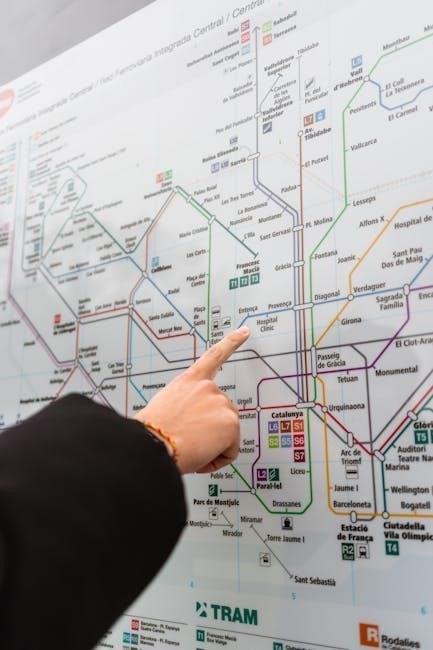
Having a readily available PDF copy allows users to access the map offline, a significant advantage during events with limited connectivity. It’s particularly helpful for prospective students planning visits, new students orienting themselves, and visitors attending events. The map simplifies finding specific classrooms, student services, and understanding the campus layout, ultimately enhancing the GMU experience.

GMU Campus Locations
George Mason University encompasses multiple campuses: the primary Fairfax location, an Arlington campus, and the Science & Technology campus in Manassas.
Fairfax Campus ౼ Primary Location
George Mason University’s flagship campus resides in the City of Fairfax, Virginia, serving as the central hub for most undergraduate students. Spanning 677 wooded acres, this expansive location is home to over 6,000 students residing in its 40 residence halls. The Fairfax campus offers a comprehensive university experience, boasting numerous academic buildings, athletic facilities, and student services.
Conveniently situated just 20 miles from downtown Washington, D.C;, the campus provides easy access to the nation’s capital. Accessibility is further enhanced by nearby Metrorail, Metrobus, and ART bus stops. Detailed driving directions and comprehensive campus maps are readily available at maps.gmu.edu, ensuring seamless navigation for all visitors and members of the Mason community.
Arlington Campus ౼ Overview
While specific details regarding the Arlington Campus weren’t extensively provided in the source materials, it’s recognized as one of George Mason University’s key locations. This campus offers a distinct learning environment, contributing to the university’s broader academic mission. Accessing detailed maps for the Arlington Campus, alongside the Fairfax and Manassas locations, is facilitated through the official GMU maps website at maps.gmu.edu.
The digital and downloadable maps are designed to assist students, faculty, and visitors in navigating each campus effectively. Further information about programs and facilities available at the Arlington Campus can be found on the university’s website, complementing the navigational resources provided by the campus maps.
Science & Technology Campus ⎯ Manassas
The Science & Technology Campus in Manassas represents a vital extension of George Mason University’s academic reach, specializing in technology-focused programs and research. Like the Fairfax and Arlington campuses, detailed navigational resources are available to ensure easy access and orientation for all visitors and students. These resources, including the 2023 campus maps, can be conveniently accessed through the official GMU maps portal at maps.gmu.edu.
The maps provide a clear layout of buildings, facilities, and key locations within the Manassas campus, supporting efficient movement and a streamlined campus experience. Further details regarding specific programs and research initiatives at this campus are available on the university’s main website.
Navigating the Fairfax Campus
Fairfax campus maps, including the 2023 PDF version, highlight key buildings, landmarks, parking, and transportation options for effortless campus navigation.
Key Buildings & Landmarks
George Mason University’s Fairfax campus boasts numerous essential buildings and recognizable landmarks detailed on the 2023 campus map. The Johnson Center serves as the central hub for student life and dining. For fitness enthusiasts, the Aquatic and Fitness Center (T-10) provides state-of-the-art facilities.
The Aquia Building (P-4) and Art and Design Building (R-9) support academic pursuits, while Buchanan Hall (Q-8) and Carow Hall (W-5) offer further learning spaces. Don’t overlook the historic Carty House (H-4), a campus landmark. The detailed map ensures easy location of these vital spots, enhancing the overall campus experience for students and visitors.
Johnson Center ⎯ Central Hub
The Johnson Center is prominently featured on the 2023 GMU campus map as the university’s vibrant central hub. It’s a key destination for students, faculty, and visitors alike, offering a diverse range of services and amenities. You’ll find dining options, from quick bites to full meals, alongside comfortable spaces for studying and socializing.
The Johnson Center also houses important administrative offices and frequently hosts campus events. Its central location makes it easily accessible, and the map clearly indicates its position for convenient navigation. Whether you’re seeking a meal, a meeting place, or simply a place to relax, the Johnson Center is a must-visit location.

Aquatic and Fitness Center (T-10)
The Aquatic and Fitness Center (T-10) is clearly marked on the 2023 GMU campus map, representing a core resource for student health and wellness. This state-of-the-art facility boasts a comprehensive fitness center equipped with modern exercise machines and free weights. Beyond traditional workouts, the center features an aquatic component, including a swimming pool for recreational and lap swimming.
The map’s designation (T-10) allows for easy identification, guiding students and visitors directly to this important location. It’s a popular destination for fitness classes, individual training, and maintaining an active lifestyle while at George Mason University. The facility’s location is strategically positioned for accessibility across campus.
Aquia Building (P-4)
The Aquia Building (P-4) is prominently featured on the 2023 GMU campus map, serving as a key academic location for students and faculty. Identified by its map designation (P-4), the building is easily locatable for navigating the Fairfax campus. While specific departmental information isn’t detailed in the map overview, it’s a significant structure within the university’s academic infrastructure.
The map highlights its physical location, aiding in route planning for classes or meetings. Students can readily find Aquia Building using the detailed pathways and landmark indicators provided on the GMU campus map. Its inclusion ensures efficient navigation for all members of the university community.
Art and Design Building (R-9)
The Art and Design Building (R-9) is clearly marked on the 2023 GMU campus map, a vital resource for students pursuing creative disciplines. Designated as (R-9), its location is easily identifiable for efficient navigation around the Fairfax campus. The map’s detail allows users to quickly pinpoint the building’s position relative to other key landmarks and academic facilities.
For students attending art classes, visiting studios, or attending exhibitions, the map provides a straightforward visual guide. The Art and Design Building’s inclusion on the GMU map ensures accessibility and simplifies wayfinding for both new and returning members of the university community, fostering a smooth campus experience.
Buchanan Hall (Q-8)
Buchanan Hall (Q-8) is prominently featured on the 2023 George Mason University campus map, assisting students and visitors in locating this important academic building. The map clearly indicates its position, designated as (Q-8), within the broader Fairfax campus layout. This detailed mapping ensures easy navigation to classrooms, offices, and other resources housed within Buchanan Hall.
Students relying on the GMU map to attend lectures, meet with professors, or access departmental services will find the building’s location straightforward and accessible. The 2023 PDF version and digital resources at maps.gmu.edu provide a reliable guide, enhancing the overall campus experience and minimizing navigational challenges for the GMU community.
Carow Hall (W-5)
Carow Hall (W-5) is clearly identified on the 2023 George Mason University campus map, serving as a crucial navigational aid for students, faculty, and visitors. The map’s detailed representation, marking its location as (W-5), facilitates easy access to this building’s resources. Users of the GMU map can quickly pinpoint Carow Hall’s position within the Fairfax campus, streamlining their routes.
Whether attending classes, utilizing academic facilities, or attending events, the 2023 PDF map and the interactive version available at maps.gmu.edu ensure a smooth experience. The precise location marking of Carow Hall minimizes confusion and promotes efficient movement around the expansive GMU campus, benefiting the entire university community.
Carty House (H-4)
Carty House (H-4) is prominently featured on the 2023 George Mason University campus map, offering clear guidance for locating this significant building. The map accurately depicts its position as (H-4), enabling effortless navigation for students, staff, and guests. Utilizing the detailed GMU map, individuals can efficiently plan their routes to Carty House, whether for meetings, events, or administrative purposes.
The 2023 PDF version, alongside the interactive map at maps.gmu.edu, ensures easy access to this information. Precise location markings, like that of Carty House, contribute to a user-friendly experience, reducing confusion and maximizing efficiency across the 677-acre Fairfax campus. This detailed mapping supports the entire GMU community.
Parking Information
The 2023 GMU campus map provides crucial parking information for visitors and those requiring permits. Detailed markings indicate areas for Mason Square permit holders, ensuring designated access. For guests, the map clearly highlights Visitor Parking Garages, specifically Van Metre, Vernon Smith, and Fuse, simplifying the parking process.
Accessing the map – either the PDF version or online at maps.gmu.edu – allows users to pre-plan parking, minimizing delays. The map’s clarity regarding parking zones is vital given the campus’s size and activity. Understanding parking options is essential for a smooth visit to George Mason University’s Fairfax campus, supporting both convenience and efficient campus operations.
Mason Square Permit Parking
The 2023 GMU campus map distinctly outlines areas designated for Mason Square permit parking. These zones are specifically reserved for students, faculty, and staff who have obtained the appropriate parking authorization. The map’s detailed markings ensure permit holders can easily identify and access their assigned parking locations throughout the Fairfax campus;
Utilizing the PDF map or the interactive version at maps.gmu.edu allows permit holders to pre-plan their routes and parking spots, saving valuable time. Proper adherence to Mason Square permit parking regulations is crucial for maintaining campus traffic flow and ensuring equitable access for all authorized individuals. The map serves as a vital resource for navigating these designated parking areas.
Visitor Parking Garages (Van Metre, Vernon Smith, Fuse)
The 2023 GMU campus map clearly indicates the locations of visitor parking garages – Van Metre, Vernon Smith, and Fuse – providing convenient options for those visiting the Fairfax campus. These garages are strategically positioned for easy access to key buildings and facilities. The map details rates and any specific restrictions associated with each garage.
Visitors can utilize the PDF map or the interactive map at maps.gmu.edu to locate the most suitable garage based on their destination. Understanding the garage locations beforehand streamlines the arrival process. It’s important to note that visitor parking is subject to availability and may require payment via designated methods, as detailed on the map and GMU Transportation website.
Transportation Options
The 2023 GMU campus map highlights various transportation options for accessing and navigating the Fairfax campus. Conveniently, a Metrorail station, along with multiple Metrobus stops, are within walking distance, offering public transit accessibility. The ART (Arlington Rider Transit) bus service also provides routes connecting to campus from surrounding areas.
The map and maps.gmu.edu website detail specific routes, schedules, and drop-off locations for each service. For those driving, the map clearly shows roadways and parking facilities. Utilizing these options reduces reliance on personal vehicles and promotes sustainable transportation. Detailed driving directions are readily available online, ensuring a smooth journey to George Mason University.
Metrorail Access
The 2023 GMU campus map prominently features the proximity to the Metrorail system, a key transportation advantage for students and visitors. A Metrorail station is conveniently located within walking distance of the Fairfax campus, providing direct access to Washington, D.C., and surrounding areas. This offers a car-free commuting option and simplifies regional travel.
The map details walking paths from the station to central campus locations, ensuring easy navigation. Utilizing the Metrorail reduces traffic congestion and provides a sustainable transportation alternative. Further details regarding station access, schedules, and fares can be found on the WMATA website, linked through maps.gmu.edu, enhancing the overall commuting experience.
Metrobus Stops
The 2023 GMU campus map clearly indicates the locations of multiple Metrobus stops servicing the Fairfax campus. These stops provide extensive connectivity to various destinations within Fairfax County, Arlington, and Washington, D.C., offering a flexible and affordable transportation option. The map highlights routes serving key areas like the Johnson Center and residence halls.
Detailed route information, schedules, and real-time bus tracking are readily available through the WMATA website, accessible via links on maps.gmu;edu. Utilizing Metrobus complements the Metrorail access, creating a comprehensive public transportation network for the GMU community. This reduces reliance on personal vehicles and promotes sustainable commuting practices.
ART Bus Service
The 2023 GMU campus map showcases the convenient ART (Arlington Rosslyn Transit) bus service routes directly connecting George Mason University to the Rosslyn Metro station. This service provides a crucial link for students, faculty, and staff commuting from Arlington and other areas served by the Metro system. The map details specific ART bus stop locations on campus, facilitating easy access.
ART offers a cost-effective alternative to driving and parking, especially during peak hours. Schedules and route details are readily available on the ART website, linked through maps.gmu.edu. Utilizing ART in conjunction with Metrorail and Metrobus creates a robust and integrated public transportation network for the entire GMU community.
Digital Map Resources
GMU offers online interactive maps at maps.gmu.edu and interactive kiosks across campuses for easy wayfinding, plus a virtual tour at gwu.edu.
maps.gmu.edu ⎯ Online Interactive Map
maps.gmu.edu serves as George Mason University’s primary digital mapping resource, offering a dynamic and user-friendly experience for navigating all campus locations. This interactive map allows users to explore the Fairfax, Arlington, and Science & Technology campuses in detail, pinpointing building locations, parking facilities, and key landmarks with ease.
Users can zoom, pan, and search for specific destinations, streamlining their journey across the 677-acre Fairfax campus and beyond. Driving directions are readily available, ensuring convenient access for visitors. The online map is continuously updated to reflect campus changes, providing the most current and accurate information for students, faculty, staff, and guests. It’s a vital tool for planning routes and maximizing time on campus.
Interactive Kiosks on Campus
George Mason University enhances the on-campus navigation experience with strategically placed interactive kiosks. These kiosks provide a digital wayfinding solution, mirroring the functionality of the online map at maps.gmu.edu, but directly within the campus environment. Users can easily locate buildings, classrooms, and amenities by simply touching the kiosk screen.
These kiosks offer a convenient alternative for those without smartphone access or preferring a larger display. They are particularly helpful for first-time visitors or those unfamiliar with the campus layout. The kiosks are regularly updated with the latest campus information, ensuring accuracy and reliability. They represent a commitment to providing accessible and intuitive navigation tools for the entire GMU community.
Virtual Tour ౼ gwu.edu (Related Resource)
While focused on George Mason University maps, a related resource for prospective students and visitors is the virtual tour available at gwu.edu. Although belonging to George Washington University, this offers a glimpse into the broader Washington D.C. campus environment and can aid in regional orientation.
It’s important to note this is not a GMU resource, but provides a supplemental visual experience of university campuses within the area. Users can explore virtual representations of buildings and grounds, gaining a feel for the academic atmosphere. This can be particularly useful for those planning visits or considering higher education options in the region, complementing the detailed GMU campus maps available at maps.gmu.edu.

Map Features & Details (2023 PDF)
The 2023 GMU PDF map details building locations, athletic facilities, over 6,000 student residence halls, and showcases the 677-acre campus grounds.
Building Locations & Numbers
The George Mason University Fairfax campus map meticulously details the location of each building, often identified by a unique building code. For instance, the Aquatic and Fitness Center is designated T-10, while the Aquia Building is marked as P-4.
Similarly, the Art and Design Building is R-9, Buchanan Hall is Q-8, Carow Hall is W-5, and the historic Carty House is labeled H-4. These codes, prominently displayed on the map, facilitate easy identification and navigation.

The map’s precision ensures students, faculty, and visitors can quickly locate specific classrooms, offices, and facilities across the expansive 677-acre campus. Utilizing these building numbers streamlines wayfinding significantly.
Athletic Facilities
The 2023 GMU campus map clearly highlights the location of all athletic facilities available to students and the public. These include expansive fields for various sports, indoor arenas for basketball and volleyball, and specialized training centers for athletes.
The map details access points and surrounding parking areas, making it easy to plan visits to games or practices. Specific facilities, though not explicitly named in provided text, are visually represented, allowing users to quickly identify their locations.
Whether you’re a student athlete, a cheering fan, or simply exploring campus recreation options, the map provides a comprehensive overview of GMU’s athletic infrastructure.
Residence Halls (Over 6,000 Students)
The 2023 GMU campus map meticulously details the locations of numerous residence halls, accommodating over 6,000 students. These halls are visually represented, allowing prospective students and visitors to easily identify housing options. The map showcases the distribution of these facilities across the Fairfax campus, providing a clear understanding of on-campus living arrangements.
While specific hall names aren’t detailed in the provided information, the map’s layout indicates a substantial presence of student housing. Access roads and nearby amenities are also clearly marked, aiding in navigation for move-in days or campus visits.
This feature is invaluable for students planning their on-campus experience.
Campus Acreage (677 Wooded Acres)
The 2023 GMU campus map clearly illustrates the expansive 677-acre footprint of the Fairfax campus. This significant acreage is notably described as “wooded,” suggesting a blend of academic buildings and natural landscapes. The map effectively conveys the scale of the university grounds, allowing users to appreciate the campus’s size and layout.
The detailed representation of the wooded areas provides context for walking routes and outdoor spaces. This feature is particularly useful for visualizing distances between buildings and understanding the campus environment. The map highlights how the university integrates its facilities within a natural setting.
It’s a substantial and beautiful campus!

Using the Map for Planning
The 2023 GMU map assists in locating classrooms, student services, and planning efficient walking routes across the 677-acre Fairfax campus effectively.
Finding Specific Classrooms
The George Mason University 2023 campus map is invaluable for students navigating to their classes. Each building is clearly labeled with its corresponding building code – for example, the Aquatic and Fitness Center is T-10, and Buchanan Hall is Q-8.
These codes are consistently used throughout the university’s signage and course schedules, allowing for quick and accurate location identification. The detailed PDF and interactive online map at maps.gmu.edu provide zoomed-in views of building interiors, often indicating classroom numbers within each structure.
This feature is particularly helpful for new students or visitors unfamiliar with the campus layout, ensuring a smooth transition between classes and minimizing wasted time searching for the correct room.
Locating Student Services
The 2023 GMU campus map is crucial for finding essential student services. The central hub, Johnson Center, is prominently displayed and easily identifiable, serving as a key location for resources. The map clearly marks offices for academic advising, financial aid, and career services.
Furthermore, the map highlights the locations of health services, the counseling center, and the university bookstore. Both the PDF version and the interactive map at maps.gmu.edu allow users to zoom in for detailed views, pinpointing specific office locations within buildings.
This ensures students can efficiently access the support they need, fostering a successful university experience.
Planning Walking Routes
The 2023 GMU campus map is invaluable for planning efficient walking routes between classes and campus destinations. Detailed pathways and building locations allow students to estimate travel times accurately. The map’s scale and clear markings of landmarks, like the Aquatic and Fitness Center (T-10) and Art and Design Building (R-9), aid in route visualization.
Utilizing maps.gmu.edu’s interactive features, users can plot specific start and end points, generating suggested walking paths. The 677 wooded acres are well-represented, showcasing green spaces and pedestrian zones.
This feature is particularly helpful for navigating the expansive Fairfax campus and minimizing travel time.
Distance to Washington, D.C. (20 Miles)
George Mason University’s Fairfax campus benefits from a strategic location just 20 miles from downtown Washington, D.C., as clearly indicated on the 2023 GMU map. This proximity offers students access to numerous internship, cultural, and career opportunities within the nation’s capital.
The map highlights transportation options facilitating travel to D.C;, including access to Metrorail, Metrobus, and the ART bus service. Planning a commute is simplified with these routes visually represented.
Understanding this distance is crucial for students balancing academic life with off-campus engagements in the metropolitan area.